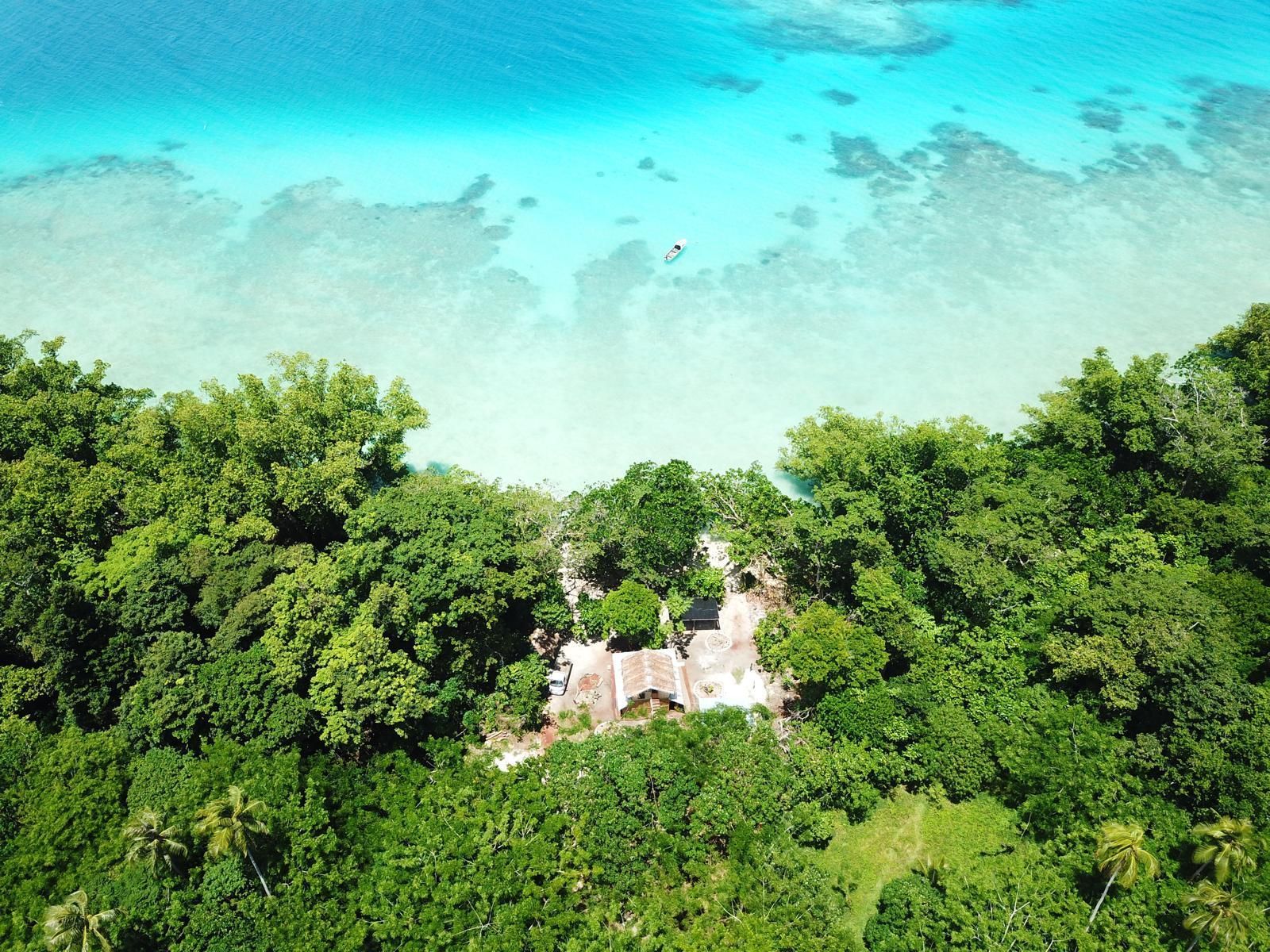
Are sea levels rising in Vanuatu?
Are Sea Levels Rising in Vanuatu? The More Complicated Truth
Yes, sea levels around Vanuatu are rising, but that is only part of the story. Vanuatu sits on one of the most tectonically active pieces of the planet, where islands can also rise, sink or suddenly move during earthquakes and volcanic events. This means that what somebody standing on a beach experiences as “sea-level rise” may be caused by the ocean rising, the land sinking, or both. In other places the opposite can happen: the land itself is rising quickly enough to partly or temporarily offset the rise in the surrounding ocean. That distinction matters when talking about climate change, coastal property and whether Vanuatu itself is “sinking.”
The science does not support the simple statement that Vanuatu as a whole is disappearing beneath the sea. Nor does it support the opposite claim that sea-level rise is imaginary. The reality is considerably more interesting. Vanuatu is an archipelago of volcanic, limestone and reef-fringed islands sitting above an active plate boundary. Different islands, and even different parts of the same island, can behave differently over time.
The ocean is rising, but the land is moving too
Satellite observations show that the western tropical Pacific has experienced substantial sea-level rise since the early 1990s. Regional Vanuatu climate assessments report around 10–15 centimetres of ocean rise across the western tropical Pacific between 1993 and 2020. This is the absolute movement of the ocean surface and is part of the broader global pattern associated with warming oceans and melting land ice. International Court of Justice
What residents actually experience at the shoreline, however, is relative sea level: the height of the water compared with the land beneath their feet. Vanuatu complicates this measurement because the land is continually being deformed by tectonic activity. If the land rises by roughly the same amount as the sea, somebody standing on the coast may observe very little apparent change. If the land subsides while the ocean is also rising, the apparent change can be dramatically greater.
Port Vila provides a particularly useful example. A regional climate assessment found that the Port Vila tide gauge showed no significant long-term relative sea-level trend during 1993–2020 because earthquake-related vertical land movement partly offset the rise in the ocean itself. The same assessment cautions that this does not mean the ocean is not rising; it means land movement altered what the local tide gauge recorded.
Some parts of Vanuatu are actually rising
Evidence of land uplift is visible throughout Vanuatu. Raised coral terraces found above present sea level record thousands of years of tectonic movement. Research on Efate has documented long-term uplift associated with the interaction of the Australian and Pacific tectonic plates, with different parts of the island rising at different average rates. ScienceDirect
Central and northern Vanuatu show even more dramatic examples. GPS measurements have recorded uplift along parts of western Santo of approximately 2–11 millimetres a year during the period studied. Ambae has also recorded strong uplift associated partly with volcanic deformation. Other areas, meanwhile, have shown subsidence. The important point is that Vanuatu does not move vertically as one solid block. AGU Journals
Ambrym provides an extraordinary example of how quickly this can happen. Following volcanic and tectonic activity in 2018, parts of the southeastern coast experienced more than two metres of uplift. Earlier geological studies found evidence that sections of eastern Ambrym have been rising for thousands of years, with raised coral reefs now sitting above the sea. PubMed Central (PMC)
For somebody looking at a beach and asking whether the sea is “going up,” these movements matter enormously.
Other islands are sinking
The opposite is also true. Some parts of Vanuatu are subsiding, which makes sea-level rise appear much faster locally.
The Torres Islands in northern Vanuatu became internationally famous after coastal flooding and the relocation of a village were presented as evidence of some of the world’s first climate-related displacement. Later geophysical research found a much more complicated explanation. Between 1997 and 2009 the absolute ocean level around the Torres Islands rose by about 150 millimetres, but the islands themselves also subsided by about 117 millimetres. The combination almost doubled the relative change experienced along the coast. PubMed Central (PMC)
Earthquakes added another layer. A large 1997 earthquake caused the islands to suddenly drop by somewhere between approximately half a metre and one metre in places. Researchers concluded that tectonic movement was a major contributor to the dramatic coastal changes observed by local residents. DOI
That study is important because it demonstrates why statements such as “the sea rose this much here” need context. Sometimes part of what appears to be rising water is actually falling land.
Are Vanuatu's islands disappearing?
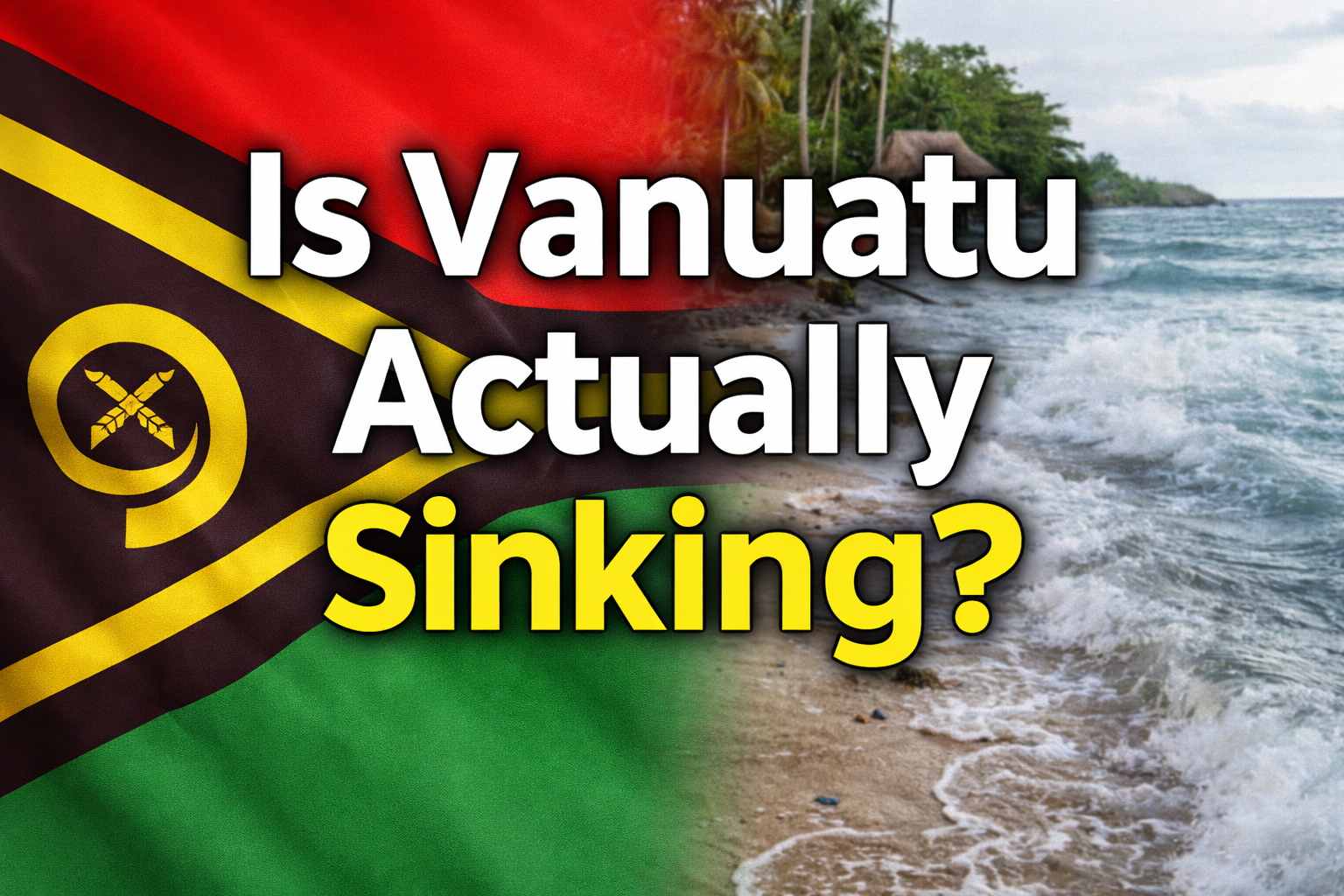
Not in the simple way often suggested by dramatic headlines.
Coastlines are dynamic. Beaches migrate, reefs grow, sediment moves, cyclones remove sand and later currents can return it. Some reef islands elsewhere in the Pacific have remained stable or even increased in land area despite rising sea levels because reefs and sediment systems continue to reshape them. Research on Pacific atoll islands has shown that many islands are capable of changing shape and maintaining land area under certain rates of sea-level rise, although that does not eliminate the risks associated with flooding, erosion, freshwater contamination or future acceleration of sea-level rise. Nature
Vanuatu is also not principally a nation of extremely low coral atolls. Many of its major islands are mountainous volcanic or uplifted limestone islands. That does not make coastal communities immune to sea-level rise, but it is very different geographically from countries where almost the entire land surface sits only a few metres above sea level.
A new 2026 study has nevertheless mapped extreme sea-level inundation risk across all 65 inhabited islands of Vanuatu. It shows that coastal flooding remains a genuine planning issue, particularly as higher mean sea levels combine with storms, waves and extreme tides.
What about claims that climate impacts are exaggerated to attract funding?
This is a criticism that does circulate in Vanuatu, especially among people who have watched the country become increasingly dependent on external funding, donor support and special revenue programs. Vanuatu does not levy personal income tax, and government revenue has historically relied heavily on indirect taxes, grants and non-tax income such as the Economic Citizenship Program. The IMF has repeatedly warned about that reliance and the vulnerability it creates when tourism, aviation or citizenship revenue weakens. IMF eLibrary
That context matters. Air Vanuatu’s collapse and uncertain recovery have placed additional pressure on the economy and public finances, while tourism earnings fell sharply in 2024. The IMF reported that tourism earnings declined by about 16% year-on-year in 2024, and that grants and other external inflows remain important to Vanuatu’s economic position. IMF eLibrary
Against that background, it is understandable that some residents question whether climate narratives can become financially useful. Vanuatu has been highly successful at placing climate vulnerability at the centre of its international diplomacy and has actively sought adaptation, loss-and-damage and resilience funding. That is not secret; it is government policy. But the existence of a financial incentive does not prove that sea-level impacts are being deliberately exaggerated.
Where criticism becomes more credible is in the way some stories have been simplified. The Torres Islands are the clearest example. A community relocation that was widely presented internationally as an early case of climate-driven displacement was later shown by geophysical research to have been heavily influenced by tectonic subsidence and earthquake-related land movement. Researchers found that local land movement was a major part of the apparent sea-level change. PubMed Central (PMC)
That does not mean climate change was irrelevant. It means the public story was more dramatic and less complete than the geology. In a country as tectonically active as Vanuatu, that distinction matters. Rising seas are real, but so are sinking islands, rising islands, earthquakes, cyclones, erosion and changing reef systems. When all of those causes are packaged under a single climate-change label, local scepticism is not difficult to understand.
The fair conclusion is not that Vanuatu invented a climate problem to attract money. It is that climate finance is economically important to Vanuatu, and that creates a strong incentive for the country to emphasise climate vulnerability internationally. At the same time, some of the most dramatic coastal stories have later turned out to involve more than climate change alone. Both things can be true at once.
What this means if you are buying coastal land
If you are considering beachfront or near-beach property in Vanuatu, national headlines are less useful than understanding the individual site. Two beaches on different islands can have completely different coastal histories.
Look at the elevation of the land, evidence of historical erosion, vegetation lines, reef structure, storm exposure and where exceptionally high tides have previously reached. Talk to people who have lived beside that particular coastline for decades. A beach that changes seasonally should not automatically be interpreted as permanent sea-level loss, while repeated inundation at the same location should not be dismissed simply because another island elsewhere in Vanuatu is rising.
Tectonic movement should also be part of the conversation. Vanuatu's geology means future earthquakes can alter coastal elevations suddenly. No nationwide statement about “Vanuatu sinking” can capture that complexity.
So, are the seas rising in Vanuatu?
Yes. The underlying ocean around Vanuatu is rising, and the scientific evidence for that is strong. But Vanuatu itself is not simply sinking into the Pacific.
Some areas are subsiding and therefore experience faster relative sea-level rise. Other areas are uplifting, sometimes by several millimetres a year and occasionally by metres during major tectonic or volcanic events. Port Vila has experienced periods when land movement largely offset the local relative sea-level trend. Parts of Santo, Aore and Ambrym have risen. The Torres Islands have experienced significant subsidence. Vanuatu Climate Futures
That is the more accurate picture: a rising ocean surrounding islands that are themselves moving.
For anyone living here, buying land or simply trying to understand Vanuatu, that is far more useful than either extreme pretending nothing is changing, or claiming the entire country is about to disappear beneath the sea.
The More Accurate Picture
The sea around Vanuatu is rising, but that does not mean every island is sinking. Some coastlines are subsiding, some are uplifting, and earthquakes, cyclones, erosion, reef growth and sediment movement can all change what people see at the shoreline. In a country this geologically active, the simple story is rarely the complete one.
Vanuatu is also a country that depends heavily on tourism, external funding and international support, so climate finance has become economically important. That creates an obvious incentive to emphasize vulnerability, even though that does not prove the impacts are being invented or deliberately overstated. The better approach is to separate measured sea-level rise from local land movement and to look at each island, coastline and community on its own evidence.
For people living here or considering buying property, that is the practical lesson. Do not rely on dramatic headlines in either direction. Look at elevation, erosion history, storm exposure, reef structure, local knowledge and the geology of the specific area. Vanuatu is changing, but it is not changing in one simple way.
See you in Vanuatu,
Juss x
See Vanuatu for Yourself
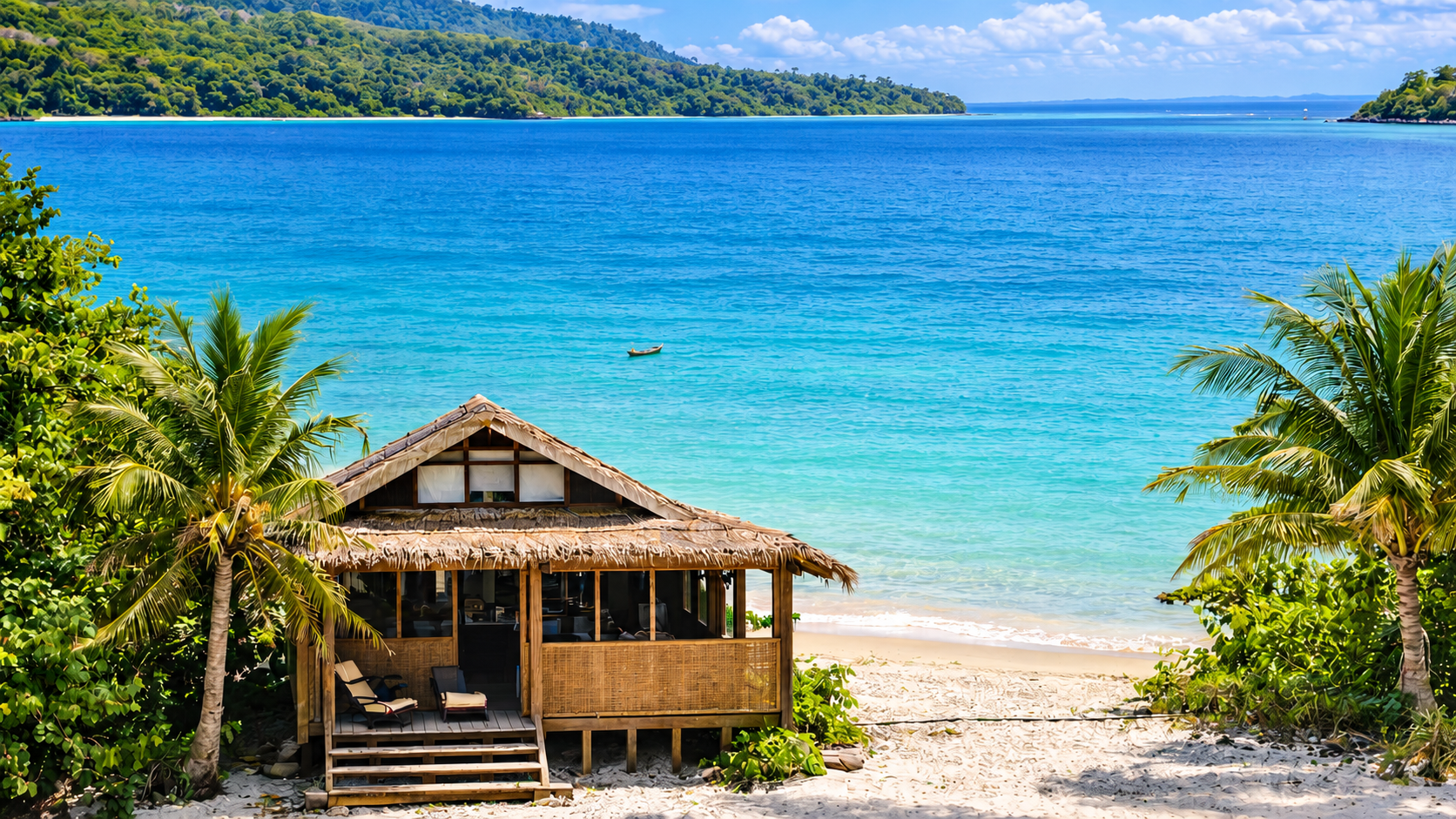
If you are trying to understand what life in Vanuatu is really like, the best way is to spend time here and see it for yourself. Stay with us on Aore Island, explore the coastline, cross to Santo, talk to locals and experience the landscape beyond the headlines.
You can stay at Beachfront on Aore or Aore Treehouse and use Aore as a base while you explore Santo and the surrounding islands.
Come and see us on Aore.
See you in Vanuatu,
Juss x
Contact Us
We will get back to you as soon as possible.
Please try again later.
Recent Posts